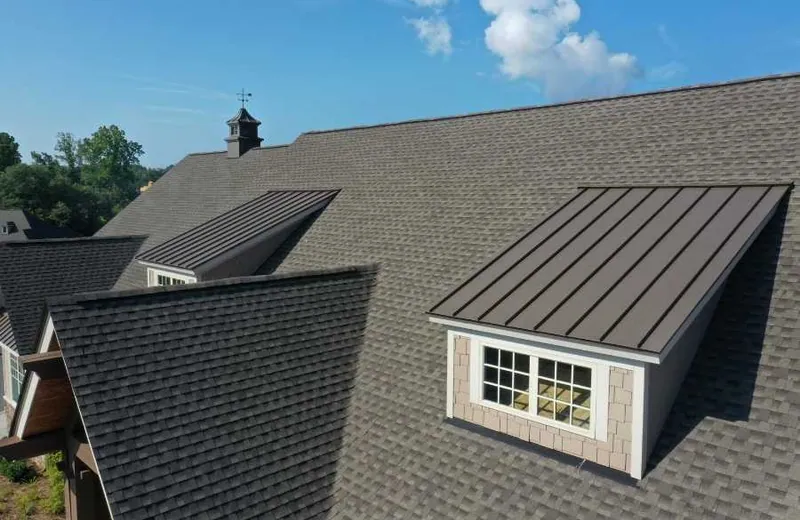
How much does a new roof cost in Billerica?
Most asphalt shingle replacements on Billerica ranches and capes land somewhere between $13,000 and $22,000. Larger colonials with chimneys and multiple valleys usually run $19,000 to $32,000. The biggest factors are roof size, pitch, how many layers have to come off, and how much rotted decking we find. Metal, slate and cedar cost significantly more. Your written estimate lists the full scope and a per-sheet price for any wood replacement, so the price you approve is the price you pay unless you choose to add something. Financing is available.
How long does a roof replacement take?
The actual installation on a typical Billerica home takes one to three days. Bigger or more complicated roofs, and premium materials like slate or standing seam, take longer. Before that, plan on roughly one to three weeks for the permit, material ordering and scheduling. Historic commission or HOA review can add time. Weather matters too. Most replacements happen between April and November, and spring and fall fill up fast, so booking early gets you a firm date. We clean the property at the end of each workday, so you can live at home normally during the job.
Do I need a permit to replace my roof in Billerica?
Yes. In Massachusetts, reroofing normally requires a building permit from your town's building department. In Billerica, that's the Building Department at Town Hall. The permit makes sure the work meets the State Building Code, including the ice barrier requirement and the two-layer limit. We handle the permit for you. If your home is in a historic district, such as Billerica Center or parts of Concord and Lexington, or belongs to a condo association, you may also need approval before you change materials or colors.
How can I prevent ice dams?
Keep the roof deck cold. Ice dams form when heat leaking from the attic melts the snow on the roof. The long-term fix is air-sealing and insulating the attic floor, adding balanced soffit and ridge ventilation, and making sure there's an ice-and-water barrier at the eaves. Keeping gutters clear helps, and so does raking the first few feet of snow off the roof after big storms. Heat cable can help in trouble spots. Never chip ice with a hammer or shovel, because that damages shingles. Steaming is the safe way to remove it.
When should I call a roofer instead of waiting until spring?
Call right away if water is coming into the house, shingles or flashing have blown off, a limb is on the roof, or ice dams are causing stains on your ceilings or walls. Waiting lets water soak insulation, drywall and framing, and that raises the repair bill fast. We can steam off ice dams and tarp damaged areas in winter. Things like curling shingles, granules in the gutters or a roof older than 20 years can usually be inspected now and replaced in the spring.
Can you replace a roof in winter?
Often, yes. Winter reroofs are possible between storms when the deck is dry and clear of snow. Asphalt shingles need warmth to seal, so in cold weather we take extra steps like hand-sealing the tabs to keep them bonded until spring sun finishes the job. If your roof is failing badly, that's usually better than tarping it for months. If it's still holding up, we may recommend a temporary repair now and replacement in April.
Will you help with an insurance claim for storm damage?
Yes. After nor'easters, microbursts or a tree hitting the roof, we tarp it to stop further damage, then document everything with photos and a written description of what we found. That gives your adjuster clear evidence and gives you a repair scope to compare with the insurer's estimate. Coverage depends on your policy, but wind and fallen limbs are among the most common roof claims in this area. Be careful with storm-chasers who knock on doors and push you to sign quickly.
Can you install new shingles over my old roof?
Sometimes, but we rarely recommend it. Massachusetts code allows at most two layers, so if your roof already has two, it has to be torn off. Many Billerica homes do. Even if you only have one layer, roofing over it hides rotted decking, keeps you from installing the ice barrier properly at the eaves, and traps heat that shortens shingle life. A full tear-off lets us inspect and fix the deck, which is where hidden ice-dam damage tends to be on mid-century homes.